Elizabeth Barton
Wolf HallElizabeth Barton, known as the Holy Maid, is a countrywoman whose claimed visions acquire religious and political force at a moment when Henry VIII is seeking to marry Anne Boleyn and redefine authority over the English Church. Her story turns on the instability of that force: a public audience treats her as a vessel of divine warning, while the government investigates the people and institutions around her; Barton eventually admits that her supernatural claims were inventions, yet her confession does not spare her from the state’s punishment.
Origins and the making of a prophetess
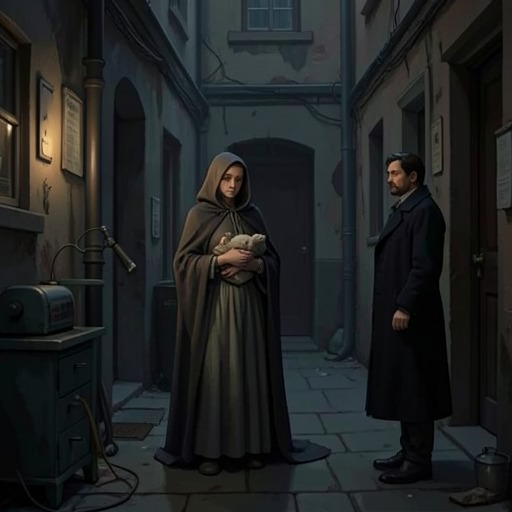
Barton is an orphan with one sister, brought up in the household of an estate agent serving Archbishop William Warham. According to the account assembled by Thomas Cromwell, she attracted little notice until she was about twenty, when an illness was followed by trances, visions, and speech in voices she understood as otherworldly. She said she had seen St Peter with the keys of Heaven and St Michael weighing souls, and claimed she could identify the fate of the dead: a high voice for those in Heaven, a low one for those in Hell.
Her reputation was built through a mixture of bodily spectacle, devotional claims, and the attention of religious networks. Reports described her as going without food for as long as nine days, collapsing, and experiencing spasms and trances. A ruined chapel in the Kentish marshes became a pilgrimage site; its restoration, a flow of offerings, reported cures, and stories of candles lighting without human help drew crowds. Barton was later placed in a convent in Canterbury. Cromwell suspects that priests and monks around her directed the pilgrims’ attention and profited from it, and that they also encouraged her to speak against the king’s proposed marriage. The evidence presents this as his political assessment, not as an independently established explanation of every part of her rise.
Prophecy enters royal politics
Barton’s significance changes when her religious reputation becomes attached to the succession and the king’s marriage. Archbishop Warham tells the king’s council that he has not personally heard every reported prediction, but believes Barton has a gift for discerning what troubles people. Warham also acknowledges that she may be unwise or misled. Reports reaching the court say that she warned Henry he would reign only a short time if he married Anne, and that she condemned the heretics around him.
The novel makes the conflict visible in a public encounter between Barton and the royal party. In the crowd, dressed as a Benedictine nun, she presses forward to address Henry. She warns that he will burn if he does not punish heretics and predicts that he will not reign seven months after marrying Anne. When Henry asks who might replace him, she names Lord Montague and the Marquis of Exeter, both of royal blood, and says she has seen the king’s mother surrounded by pale fires. She also says she has searched Heaven, Hell, and Purgatory for Cardinal Wolsey without finding him. Anne calls for Barton to be removed; Norfolk reacts angrily, while Henry is unsettled but engages her directly. The episode shows how a claim to speak for Heaven can enter the royal presence without official office, and how quickly prophecy becomes a question of dynastic allegiance.
Barton’s following is not confined to ordinary pilgrims. Thomas More and John Fisher have met her, and noblewomen, including Lady Exeter, are said to have sought her predictions or prayers for dead relatives. This gives the government grounds to regard the network around her as politically consequential: the Marquis of Exeter is a possible alternative to Henry in the event of an imperial intervention, and his household’s connection with Barton therefore attracts particular attention. Cromwell proposes watching who visits her and makes offerings before deciding how to proceed. His approach treats prophecy both as a matter of religious belief and as a channel through which opposition to the king might be organized.
Investigation and confession
The authorities’ investigation exposes the distance between Barton’s public role and her private account of its origins. After she is brought to London and held in a private house, she is questioned by Lord Chancellor Thomas Audley and Archbishop Thomas Cranmer, with Richard Riche taking notes at a later session. Barton does not submit meekly to their standing: when challenged about how she knows what she claims, she answers that an angel told her. The interrogators also confront her with the failure of her predictions as time passes, including the survival of the king after his marriage to Anne and the birth of their daughter.
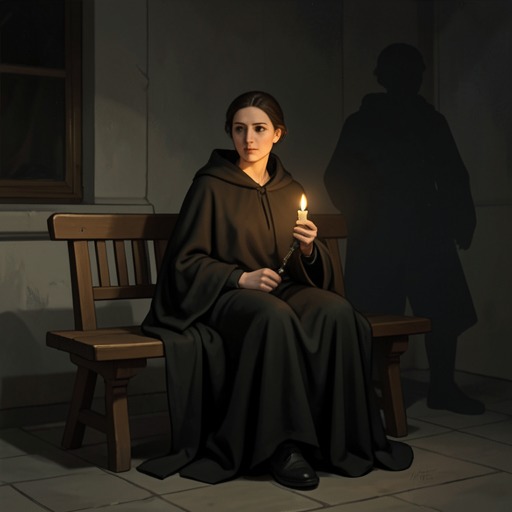
On a Sunday, after attending Mass with her custodians, Barton breaks with the story she has maintained for years. She says that the visions were invented and that she never spoke with heavenly beings or raised the dead. She explains that what she had taken for angels’ voices could have been ordinary sounds: singing in a chapel, a woman crying in the road, or dishes in a kitchen. The reported letter from Mary Magdalene, written in gold, had been composed by Father Bocking and decorated by a monk. Barton’s confession also reveals the pressures that sustained her performance: once people began asking what a vision meant, she felt unable to disappoint them or retract it, fearing that if she tried to turn back they would destroy her.
Her admission is not presented as a simple release from danger. Barton asks whether she might return home to Kent, and Cromwell says he will see what can be arranged; Cranmer insists that she must first make a public acknowledgment of the imposture. During the questioning, she treats the Archbishop with condescension and continues to claim spiritual authority, even as the political credibility of that authority collapses. The contrast between her earlier certainty and her confession makes the question of agency difficult: she acknowledges fabrication, but describes a role that became harder to escape as other people invested in it.
Prosecution, sentence, and aftermath
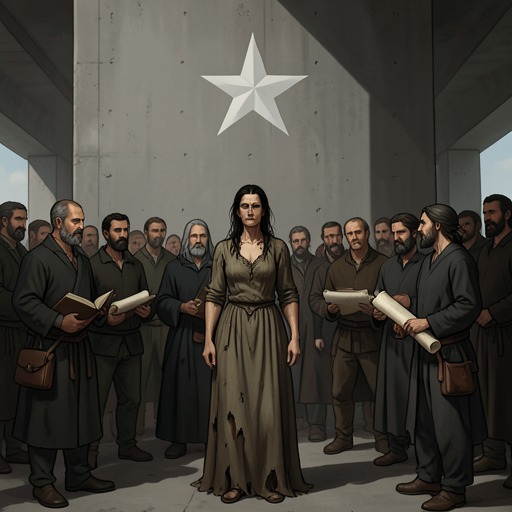
The government’s case proceeds through Parliament as well as interrogation. On 21 February, a bill of attainder against Barton and her allies is laid before the House of Lords. Fisher’s name is included, and More’s is added at Henry’s command, making the proceedings a wider confrontation over opposition to the king’s marriage and religious policy. Cromwell visits Barton in the Tower before her scheduled death. She tells him that Mary Magdalene had foretold her death and asks whether she will be burned; she also speaks of a vision of the king’s future punishment. Cromwell tells her that six others will die with her, and confronts her with the consequences her vanity has brought upon them, while recognizing that their own ambitions have helped bring them into danger.
The sentence is altered: Barton is to be hanged, not burned. When Fisher asks pardon and pleads illness, Henry allows the bill against him to proceed while holding open the possibility of mercy for those who admit fault. The king also agrees to remove More’s name from the bill after councillors kneel and ask him to do so. These distinct outcomes place Barton at the center of a political process that treats the same alleged opposition differently according to confession, intervention, and royal decision.
The novel also records the material poverty of Barton’s final circumstances. An inventory of her possessions lists a few household goods, including a small basin weighing twelve pounds, a coat valued at five shillings, and an old mantle given in charity to a younger nun. The property is forfeited to the king as the goods of a traitor. Cromwell notes that Barton should have money to pay the hangman, because in his view the poor must pay even for the means of their own death. A year after her execution, the refusal of monks at the London Charterhouse to swear the required oath leads to a renewed and harsher campaign against religious dissent. Barton’s story thus ends not with the disappearance of prophecy from politics, but with its absorption into the state’s machinery of investigation, legislation, and punishment.